Peel-and-Stick Countertop Film vs. Replacing a Countertop: Cost Comparison
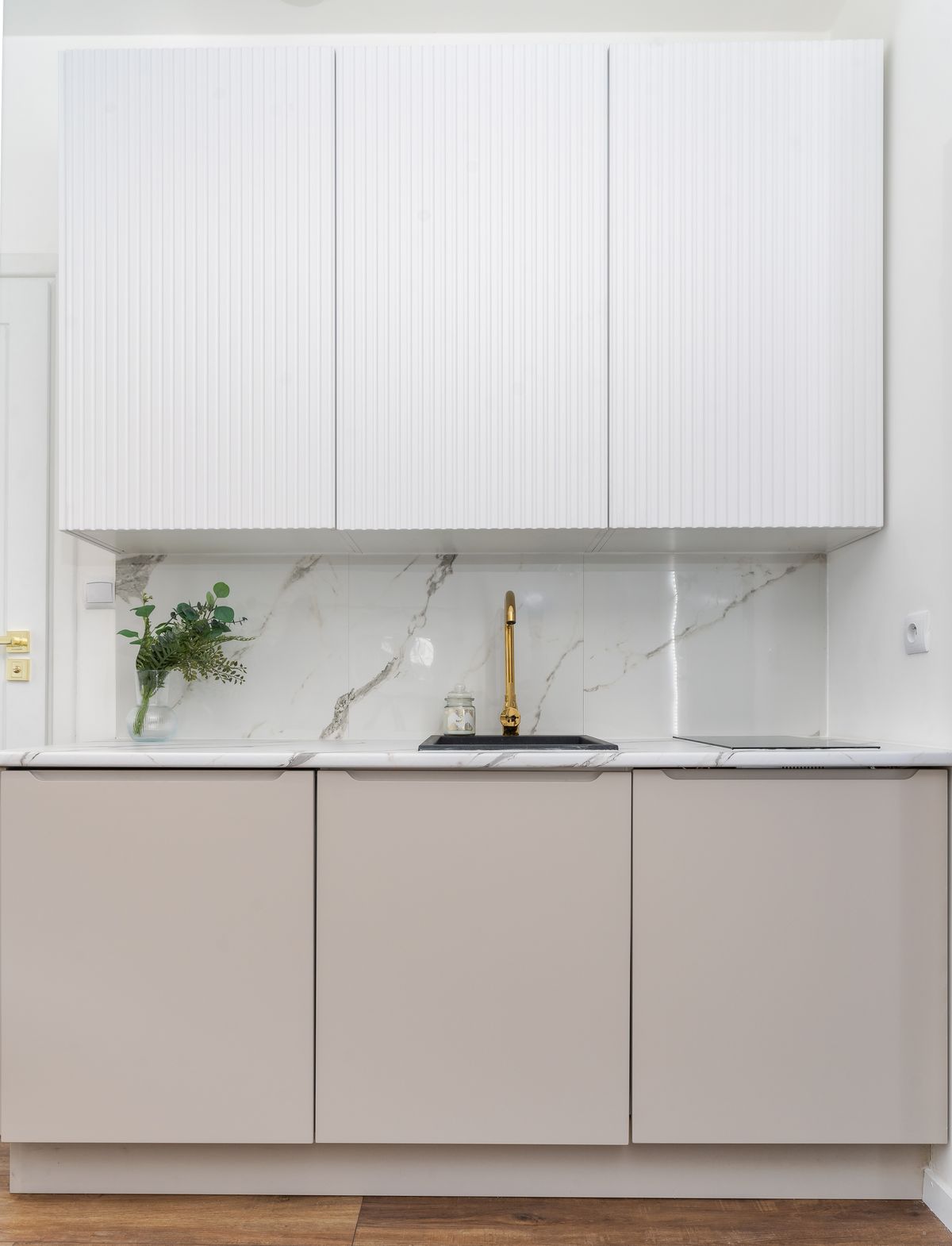
Countertop film promises a granite or marble look for a fraction of the price. It delivers on price — durability is where the trade-off shows up.
Cost breakdown
For an average kitchen (roughly 25–30 linear ft of counter):
| Countertop film | New laminate counter | New quartz/granite counter | |
|---|---|---|---|
| Material + install | $60–$150 (DIY) | $1,200–$3,000 (installed) | $3,500–$9,000 (installed) |
| DIY-friendly? | Yes | Rarely (needs precise cutting) | No (requires pros) |
Durability trade-off
This is the real decision factor, not price:
- Countertop film handles light use well but is vulnerable to heat (hot pans directly on it can bubble or discolor it) and sharp knives (cutting directly on the surface will score it). Realistic lifespan: 1–3 years with careful use.
- New laminate holds up to daily kitchen use for 10–20 years but doesn’t tolerate direct heat either.
- Quartz/granite handles heat and scratches well and lasts decades, at a much higher upfront cost.
Who each option makes sense for
| Situation | Best fit |
|---|---|
| Renting, want a quick visual upgrade | Countertop film |
| Own the home, current counter is intact but dated | New laminate |
| Own the home, want a long-term high-durability surface | Quartz/granite |
| Landlord approved a permanent upgrade | New laminate (best cost-to-durability ratio) |
Tips to make film last longer
- Always use a cutting board — never cut directly on the film.
- Use trivets or pot holders for anything hot, even briefly.
- Wipe spills promptly; some adhesives soften under standing water over time.
Bottom line
Countertop film is the right call for renters who want a temporary, reversible upgrade and are realistic about needing to replace it every year or two with normal use. For anyone who owns their kitchen and wants a lasting surface, the cost gap to real laminate is large enough that film should be treated as short-term, not a permanent fix.