10 Renter-Friendly Upgrades: 2026 Prices and Deposit Risk
Most renter-friendly upgrades cost less than $150 at 2026 retail prices, and the cheapest ones (a tension rod, LED bulbs, a pack of adhesive hooks) come in around $3 to $15. What separates them is not the price tag. It is what happens when you take them down.
This guide covers ten upgrades. Each one has a price range from a retail page we read in September 2026, a deposit-risk rating with the reason behind it, and one thing to check before you buy. The risk ratings are our own judgment, built from the caveats manufacturers and renter-advice sites publish. We did not test any product, and none of these is guaranteed to leave your walls or floors untouched.
The ten upgrades at a glance
Costs are what retail pages listed on September 21, 2026, or our own arithmetic from those listings (marked below). Effort is our estimate.
| Upgrade | Typical cost | Effort | Deposit risk (our rating) | Best for |
|---|---|---|---|---|
| Adhesive hooks and strips | $9–$48 | Minutes | Low | Coats, towels, light frames |
| Removable wallpaper, accent wall | $66–$105 | An afternoon | Low to medium | A dull bedroom or living room wall |
| Peel-and-stick backsplash | $96–$260 | An afternoon | Medium | Dated kitchen wall behind the sink |
| Peel-and-stick floor tiles | $85–$250 | A weekend | Medium to high | Only with written permission |
| Area rug | $15–$160 | Minutes | Low | Covering worn or ugly flooring |
| Tension rod and curtains | $23–$68 | Minutes | Low | Windows, closets, room dividers |
| Stick-on or plug-in lighting | $7–$90 | Minutes | Low to medium | Dark kitchens and corners |
| Cabinet knobs (keep originals) | $27–$160 | An hour | Low | Kitchens and vanities |
| Freestanding shelving | $28–$150 | An hour | Low, with an anchoring catch | Storage without drilling |
| Removable window film | $10–$30 | An hour | Low | Privacy on street-level windows |
Typical cost of each upgrade
- Adhesive hooks (1–4 packs)$9–$48
- Removable wallpaper (80 sq ft wall)$66–$105
- Peel-and-stick backsplash (20 sq ft)$96–$260
- Peel-and-stick floor tiles (100 sq ft)$85–$250
- Area rug (5x7)$15–$160
Premium rugs run to about $400.
- Tension rod plus curtains (one window)$23–$68
- Stick-on or plug-in lighting$7–$90
- Cabinet knobs (10–20 pieces)$27–$160
- Freestanding shelving unit$28–$150
- Window film (one sheet)$10–$30
What the deposit rules say
Small nail holes from hanging pictures count as normal wear and tear in the guides we read, so a landlord generally cannot charge for them. Large holes from drilling, clusters of holes and holes that crack the paint around them can be charged. One landlord-side guide, last updated in 2023, says a flat fee of $5 to $25 per hole is typical. A 2026 renter guide puts the “normal” limit at roughly one to three small nail holes per wall.
State law and your lease decide the rest, and this is not legal advice. Our guide to getting your full security deposit back covers the common deductions. We found no sourced figure for what removing damaged wallpaper or floor tile typically costs a tenant, so the ratings below are based on how each product can fail, not on a dollar amount.
The ten upgrades, one by one
1. Adhesive hooks and strips
A six-hook pack of Command medium hooks (3 lb per hook) was $8.99 at Target, and a comparable value pack was $12.49 at Staples. Most homes need two to four packs, which gives the $9–$48 range above.
Risk: low. The listing tells you to wait 7 days after painting, avoid wallpaper, clean the spot with rubbing alcohol and pull the strip slowly straight down. The same Target page carried reviews reporting adhesive failure or wall damage, so outcomes vary. Check first that the paint is cured and the hook’s weight rating covers what you hang. More in Command hooks vs. nails and screws.
2. Removable wallpaper
Target’s peel-and-stick rolls ran $21.99–$35 and covered about 30.75 sq ft each. An 8 by 10 ft accent wall is 80 sq ft, so three rolls, or $66–$105 (our estimate).
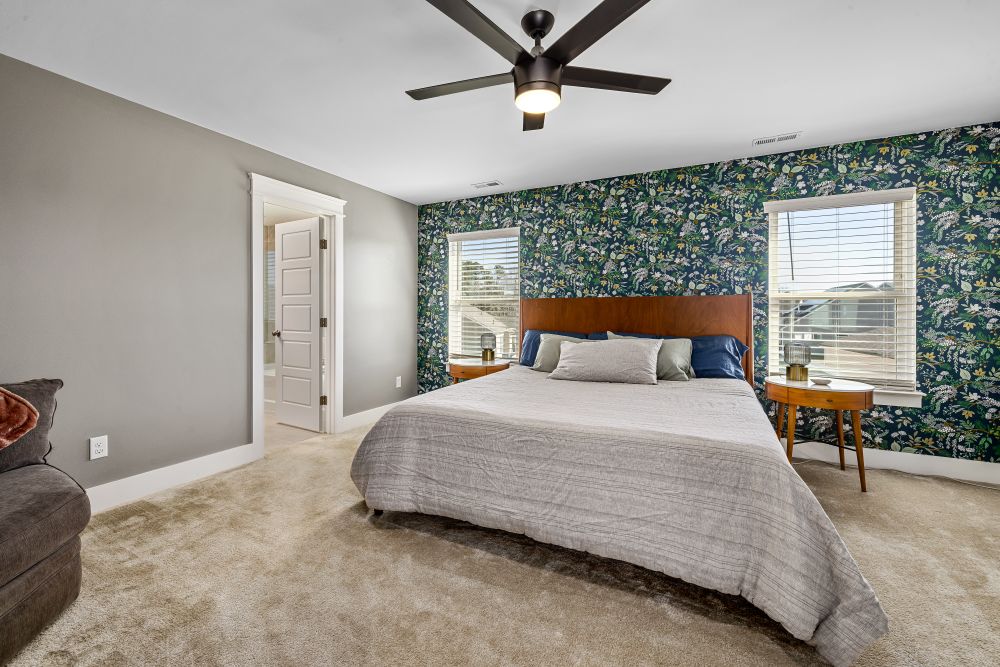
Risk: low to medium. Tempaper’s FAQ says flat and matte paint is not recommended because paint can come off with the wallpaper, and it advises waiting at least 30 days after painting. It also says it cannot guarantee a clean removal from existing wallpaper. A blogger who has removed a dozen-plus installs reported one 3–4 inch patch of paint pulled off after three years, and called it her worst case. That is one person’s experience, not data. Check the sheen of your paint and stick a test piece somewhere hidden. Compare costs in removable wallpaper cost per room and peel-and-stick wallpaper vs. paint.
3. Peel-and-stick backsplash
Target sold four-piece packs covering about 2.3–2.6 sq ft for $12.49–$12.89, and branded Smart Tiles packs for $24.99–$32.99. That works out to roughly $5–$13 per sq ft (our calculation), so a 20 sq ft backsplash lands at $96–$260. Bob Vila’s cost guide, updated in 2023, gives a wider $4–$30 per sq ft for materials.
Risk: medium. RenterFriendly.com says the adhesive can bond hard over time and can lift paint on painted drywall, and that these tiles work best on clean, smooth, non-porous surfaces such as tile or laminate. Check what your wall is made of and how greasy it gets. See peel-and-stick backsplash vs. tile.
4. Peel-and-stick floor tiles
Target listed 20 twelve-inch tiles for $24.99 on sale ($49.99 regular), 50 tiles for $42.50, and 36 wood-look planks for $76.90. For 100 sq ft, that is about $85 at the cheapest to $250 at regular prices (our estimate).
Risk: medium to high. Hunker’s removal guide says sticky residue will be left on the subfloor and that older tiles get stickier with time. RenterFriendly.com calls floors the highest-stakes peel-and-stick category and says tiles left up for years raise the risk. Check your lease and get permission before opening the box. Loose-lay options are in our renter-friendly flooring cost comparison.
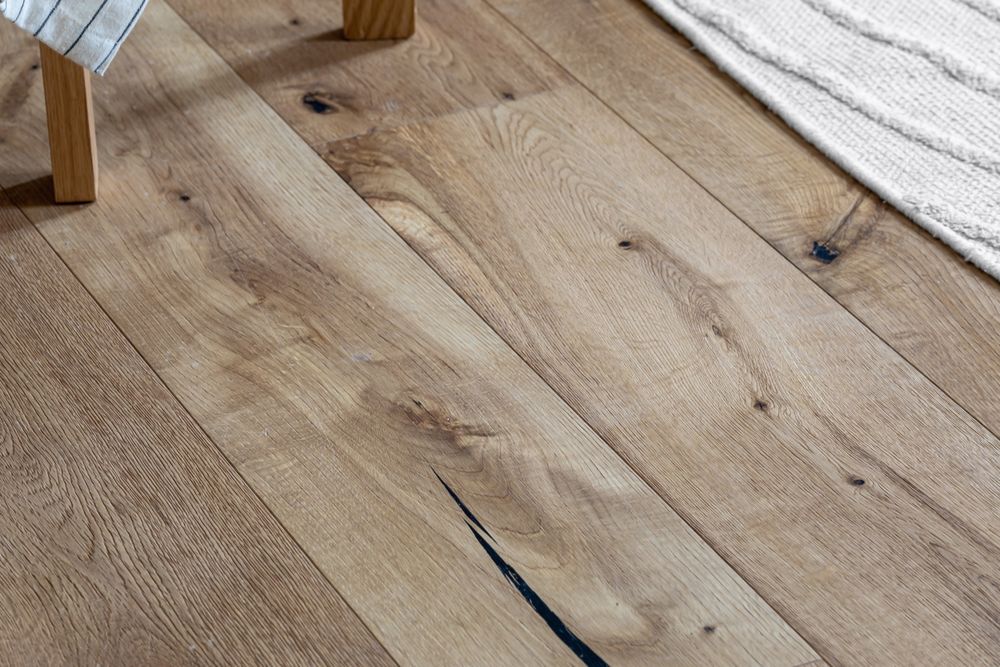
5. Area rugs
Target’s 5x7 rugs started around $15–$30, with mid-range at $80–$160 and premium at $200–$400.
Risk: low, with one catch. Floor & Decor says rubber- or latex-backed rugs should not go on any vinyl flooring, because they can discolor or stain it. Check your floor type before buying, and pick a backing or pad that says it is safe for that floor.
6. Tension rods and curtains
At Target, small tension rods started at $2.97 on clearance, and 60 to 72 inch rods ran $9–$13. Curtain panels were $12–$45 each and pairs $20–$55. One window is roughly $23–$68 (our sum).
Risk: low. A renter-advice blog says tension rods hold by pressure alone and leave no marks. Check the rod’s weight rating so heavy blackout panels do not bring it down. For closets, see over-door organizers vs. closet systems.
7. Stick-on and plug-in lighting
Battery stick-on lights ran $6.79–$10.99 for singles and pairs, $19.99 for a three-pack with a remote, and $29.99 for a rechargeable pair of light bars. Plug-in wall sconces started at $21.99, with many at $40–$90. Four-packs of standard LED bulbs were $6.99–$9.99, smart bulbs $10.39–$12.99 and Wi-Fi smart plugs $12.99–$29.99.
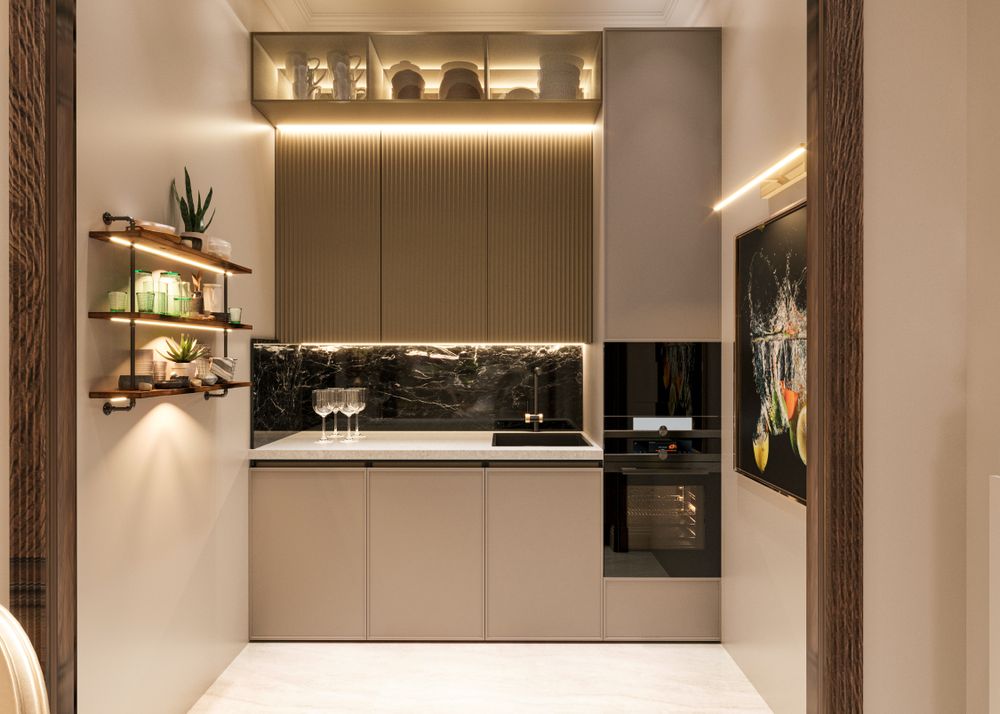
Risk: low to medium for stick-on strips. An LED strip retailer’s removal guide says the adhesive can pull paint if you peel it off forcefully, and suggests warming it with a hair dryer and peeling slowly. Plug-in and battery lights avoid wiring altogether. Check the surface you will stick to. The trade-offs are in stick-on vs. hardwired under-cabinet lighting.
8. Cabinet knobs (keep the originals)
Target listed single knobs from $4.27 to $21.59, two-packs at $10–$16 and ten-packs at $27–$32. For 10 to 20 pieces, that is $27–$160 (our estimate).
Risk: low if you keep the originals. One renter-advice blog suggests storing them in a labeled bag. Check that the new hardware fits the existing holes. If it needs new ones, that is drilling and belongs in the ask-first list below.
9. Freestanding shelving
Target’s basic three-shelf unit was $28 and a five-shelf unit $40. Most mid-range bookcases sat between $40 and $150, with higher-end pieces near $280.
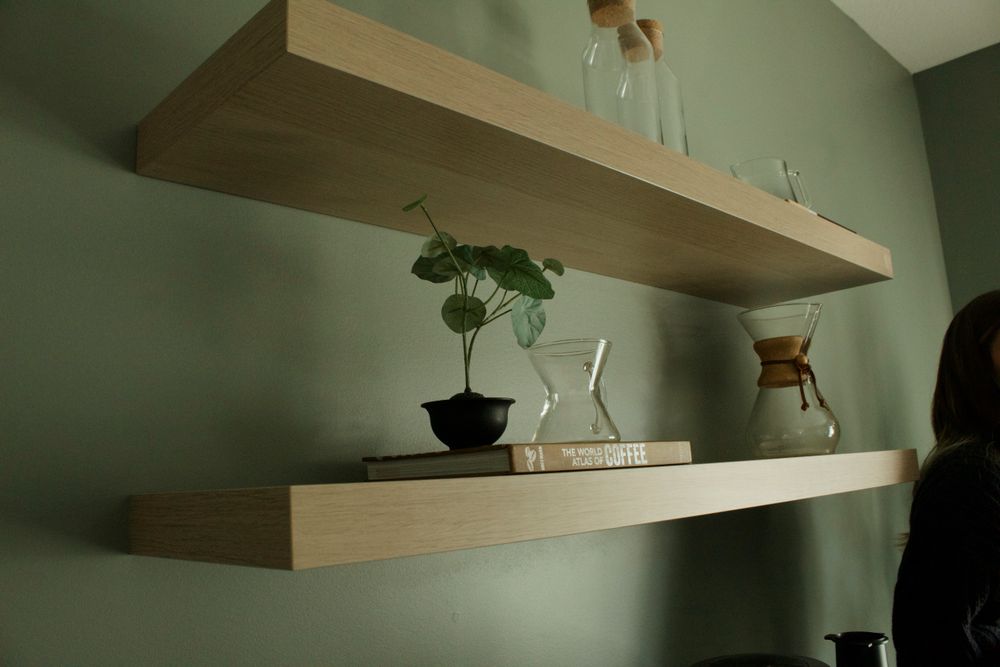
Risk: low for the wall, with a catch. The Consumer Product Safety Commission recommends securing furniture to the wall with anti-tip devices, and the National Council on Aging says to anchor into a stud, which takes under $20 and about 20 minutes. Anchoring means a screw hole, so ask before you do it. Costs are compared in freestanding vs. built-in shelving.
10. Removable window film
Target listed static-cling and removable films from $10.19 for a 24 by 36 inch sheet to $29.99 for decorative patterns.
Risk: low for static cling. Gila’s FAQ says its static-cling films can be re-applied and adhesive films cannot be re-installed. A recently installed film peels off, while older ones may need a remover kit. Check the manufacturer’s instructions for your window type, since Gila says its films go on dual-pane windows only if used correctly.
Where the sources disagree
- How long to wait after painting. Command’s hook listing says 7 days. Tempaper says at least 30 for wallpaper, and RenterFriendly.com says 30 for tiles. The sources do not explain the gap. Our inference is that heavier adhesives need more cure time, so use the longer number for anything large.
- Backsplash prices. Bob Vila’s $4–$30 per sq ft is wider than the $5–$13 we calculated from Target packs. Bob Vila says the top of its range is for high-quality tiles but does not explain how it set the range, and we only sampled one retailer.
- “Removable” versus “allowed.” Retail listings call these products renter-friendly. A 2026 tenant guide lists adhesive wallpaper among alterations that generally need consent. A removable product is not the same as permission.
Keep the originals: a checklist
- Photograph every wall, floor and fixture you plan to touch before you start (our suggestion).
- Put swapped cabinet knobs in a labeled bag, one bag per room.
- Keep the original light bulbs and any fixture covers you remove.
- Save the landlord’s written reply somewhere you will find it a year from now.
- Set a reminder to reverse each change a few weeks before your move-out date.
How to ask your landlord
Put the request in writing. A 2026 tenant guide says an email chain is enough and a signed addendum is better. Short and specific gets a faster yes:
Hi [Name],
I would like to make a few reversible changes in unit [number]: [for example, removable wallpaper on one bedroom wall, adhesive hooks, and new cabinet knobs]. There will be no drilling and no wiring. I will keep the original knobs and put them back before I move out, follow the manufacturers’ removal instructions, and repair anything I damage.
Could you confirm by reply that this is fine? If you would rather I skip any item, let me know.
Thanks, [Your name]
If you get the green light to paint, see how much it costs to paint a bedroom. For what to buy first, see our first $200 move-in budget.
Renter upgrades FAQ
Can a landlord charge me for small nail holes?
In the sources we read, small nail holes from pictures are normal wear and tear and cannot be deducted. Large holes, clusters of holes and holes that crack the paint can be. State law varies, so check yours and photograph the walls at move-in.
Do I need permission for peel-and-stick products?
Check your lease. A 2026 tenant guide lists adhesive wallpaper among alterations that generally need consent. Hooks and rugs rarely raise the question, but a short email costs nothing and gives you a record.
Are stick-on products guaranteed not to damage walls?
No. Tempaper says paint can come off flat or matte walls, and the Command listing we read carried reviews of wall damage. Results depend on the paint, how long the product stays up and how you remove it.
Sources
Prices and rules were checked in September 2026 (Target and Staples prices seen on September 21, 2026). Retail prices change with sales, sizes and region.
- Target: Command medium utility hooks: hook price, weight rating, surface and removal instructions.
- Staples: Command medium utility hooks: second hook price and instructions.
- Target: peel and stick wallpaper: roll prices and coverage.
- Target: peel and stick backsplash tile: pack prices and coverage.
- Target: peel and stick floor tile: pack prices and coverage.
- Target: area rugs: rug price tiers.
- Target: tension curtain rods, curtain panels: rod and curtain prices.
- Target: stick-on LED lights, plug-in sconces, LED bulbs, smart plugs: lighting and smart-home prices.
- Target: cabinet knobs, freestanding bookcases, window privacy film: knob, shelving and film prices.
- Bob Vila: kitchen backsplash cost: peel-and-stick price per square foot (updated November 2023).
- Tempaper FAQ: flat paint caveat, 30-day wait, existing wallpaper.
- The Homes I Have Made: does peel and stick wallpaper damage walls?: one renter’s removal experience.
- RenterFriendly.com: are peel and stick tiles renter friendly?: wall-tile surface and wait-time caveats.
- RenterFriendly.com: peel and stick: risk by surface, including floors.
- Hunker: removing peel-and-stick vinyl tile glue: residue on the subfloor.
- Floor & Decor: rubber-backed rugs on vinyl: rug-backing caveat.
- Kangaroo: renter upgrades checklist: tension rods, keeping original hardware, checking your lease.
- Wired4Signs: removing LED strip lights without peeling paint: why strip adhesive can lift paint.
- Gila: home window film FAQ: static cling vs. adhesive, removal, dual-pane note.
- CPSC: Anchor It: recommendation to anchor furniture.
- NCOA: preventing furniture tip-overs: stud anchoring, cost and time.
- ReadYourLease: apartment modifications and decorating rights (2026): which changes need consent, written permission, nail holes.
- iPropertyManagement: can landlords charge for nail holes?: normal wear vs. damage, flat fee per hole (updated 2023).